How Can Protective Packaging Manufacturers Improve the Durability of Your Shipments?
-
 author
- 23rd October 2026
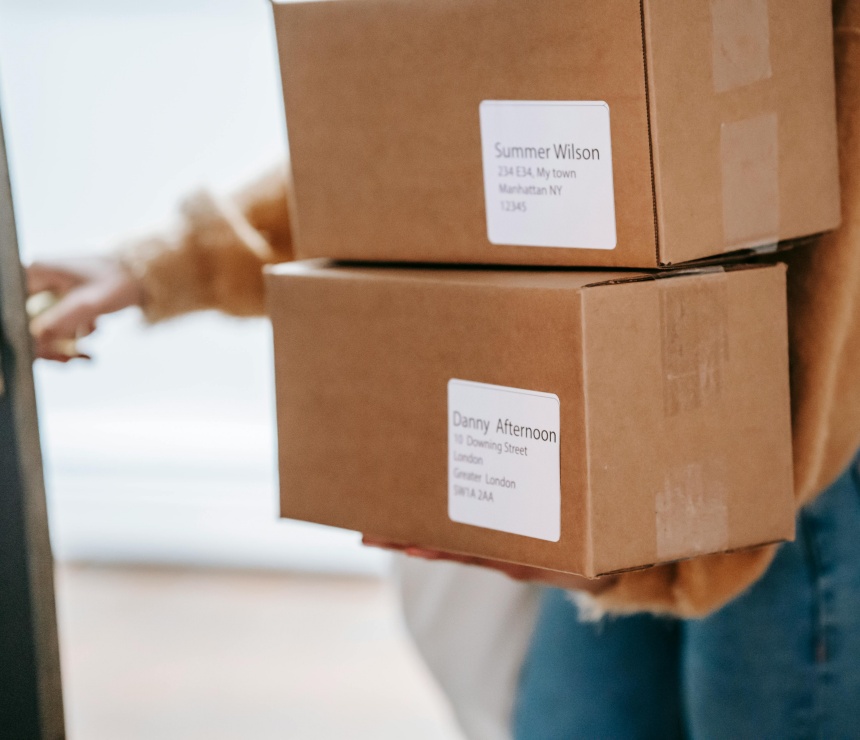
A broken bottle, a dented appliance, or a damaged electronic part does more than disappoint the customer. It can mean a refund, a replacement shipment, extra freight charges, and time spent handling complaints. Poor reviews and lost repeat orders can cost even more. For businesses shipping fragile goods, the real question is not simply how much packaging costs, but how much damage it prevents.
That is where a reliable protective packaging manufacturer makes a difference. Packaging has to survive sorting belts, stacked cartons, delivery vehicles, and repeated handling without making the packing process slower or more expensive. The right design cushions vulnerable areas, keeps items from shifting, and secures the load while avoiding unnecessary material.
PAC·ZELON supplies inflatable air column bags, air cushion film, Bag-in-Bag packaging, stretch film, and other shipping materials for e-commerce sellers, factories, distributors, and logistics operations. Below, we look at how each option addresses a different source of shipping damage, and what buyers should confirm before ordering.
What Makes a Shipment Durable?
A shipment is only as protected as it is on its roughest day in transit. The carton may be dropped, shaken for hours, pressed under other boxes, or exposed to moisture. Good packaging addresses the risks the product is actually likely to face, not every imaginable hazard at once.
Start with the product and its journey. A glass bottle needs protection around its sides and base. A heavy component needs support that will not collapse under its weight. A full pallet also needs to stay together through loading, unloading, and transport. Often, one material cannot handle all three jobs.
Match the Packaging to the Main Risk
Before changing packaging, trace where damage happens. Typical problems include:
Impact from drops or rough handling
Vibration during truck, rail, air, or sea transportation
Compression from stacked cartons
Product movement inside the package
Sharp edges piercing the outer packaging
Moisture, dust, or temperature changes
Repeated loading and unloading
Adding more padding is not always the answer. A well-fitted air column bag can hold a fragile item away from the carton wall, while correctly applied stretch film stops finished cartons from moving across a pallet. Each layer should have a clear purpose.
Use Materials That Maintain Their Protective Function
Packaging must keep working until the shipment reaches its destination. For inflatable products, that means suitable film thickness, reliable seals, and enough air retention for the expected storage and delivery period. Stretch film needs to maintain holding force; carton tape needs to stay attached when temperature or humidity changes.
PAC·ZELON offers PE, PA, PE/PA co-extruded structures, LLDPE, and metallocene polyethylene options, depending on the application. Buyers can also discuss film thickness, dimensions, color, printing, and roll specifications instead of choosing a stock item that does not quite fit.
How Protective Packaging Manufacturers Improve Product Protection
The most useful packaging improvement is often a practical one: fewer broken products, faster packing, and less wasted space in the warehouse. Protective materials should be tough enough for the route but straightforward for staff to inflate, wrap, and apply consistently.
Here is how the main PAC·ZELON packaging formats help with different shipping challenges.
Inflatable Air Column Bags for Fragile Goods
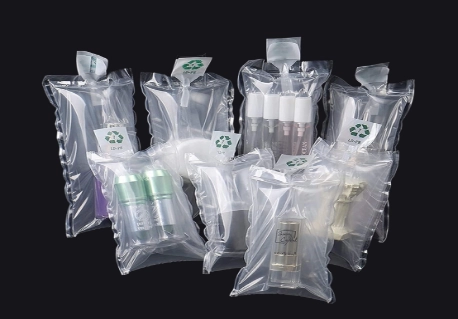
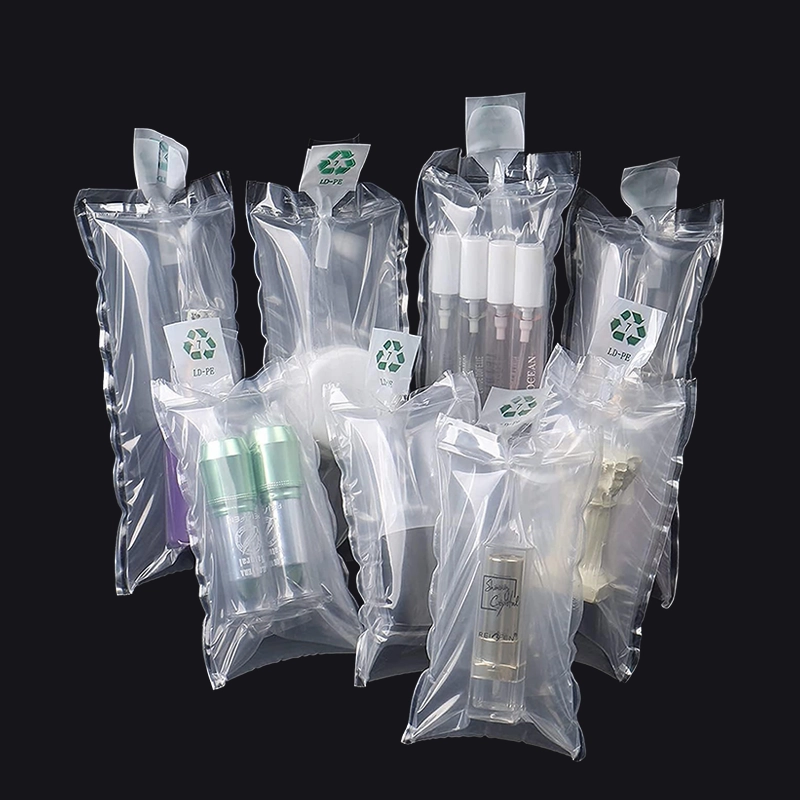
Air column bags are made with multilayer PE/PA film and form separate air chambers around the product. Because the chambers are divided, damage to one column does not necessarily deflate the others. That gives fragile products more protection than a loose layer of filler that can move out of position.
These bags are commonly used for wine bottles, cosmetics, electronics, ceramics, and glassware. A close-fitting design can cushion several sides of the product and reduce contact with the carton. For delicate goods, suppliers should test the actual product and bag together rather than judging the film alone.
Important advantages include:
High puncture resistance
Strong air retention
Lightweight storage before inflation
Custom sizing for different products
Support for manual pumps, air guns, or compressors
Common air column diameters include 2 cm, 3 cm, and 4 cm, with film thicknesses often around 45–80 μm. Under suitable storage and use conditions, air can remain in the bag for approximately 6–12 months. This is an indicative range, not a guarantee: film thickness, sealing quality, temperature, handling, and storage conditions all affect retention. Ask for samples and test them against your intended shipping and storage period.
Air Cushion Film for Void Filling and Vibration Control
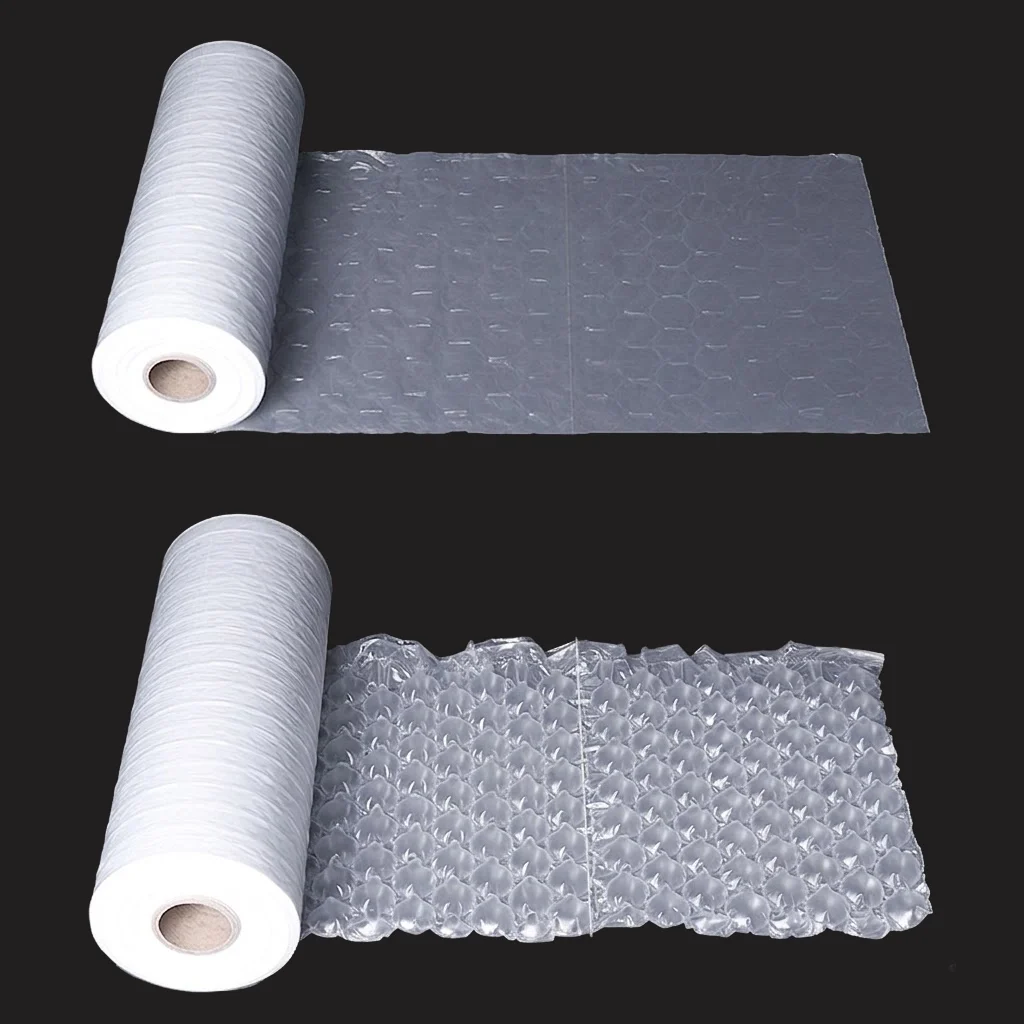
Empty space inside a parcel gives the product room to slide, hit the carton, and break. Air cushion film fills those gaps and softens repeated knocks during transport. It is especially useful when an online store ships many products in different carton sizes.
PAC·ZELON offers PE and PE/PA air cushion film options. PE can suit everyday void filling, while PE/PA structures may be preferable when a buyer needs greater toughness or longer air retention. The best choice still depends on the weight and fragility of the packed product.
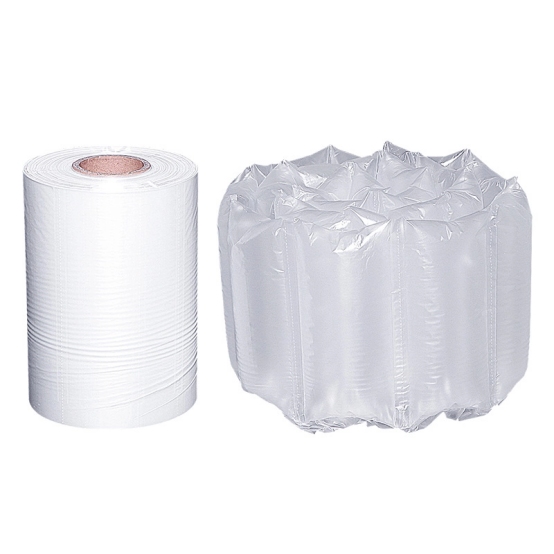
Air cushion film comes in different sheet patterns, bubble sizes, thicknesses, and roll lengths; some standard rolls reach 300 m. Inflation matters as much as film selection. Around 70–80% inflation can be a useful starting point, but the setting should be tested with the actual load. Too little air leaves the cushion soft and unable to support the product properly. Filling it too tightly makes the cushion stiff, so it absorbs less impact. Aim for a gently springy cushion that compresses under pressure and returns to shape.
Because the film arrives flat and is inflated when needed, businesses can keep more packaging on a shelf without storing large quantities of pre-filled cushioning. For busy packing stations, compatible inflation equipment also helps workers produce a consistent fill level.
Bag-in-Bag Packaging for Suspended Protection
Bag-in-Bag packaging holds the item in an inner pocket while an inflated outer layer cushions it from the surrounding carton. Rather than letting the product rest against a hard surface, the design keeps it supported within a protective air space.
This format can work well for fragile, unusually shaped, or high-value products. It is particularly useful when vibration and side impacts are concerns. Buyers should check that the inner bag fits the product securely and that the outer layer retains enough air throughout transit.
Bag-in-Bag packaging can be used for:
Glass handicrafts
Precision electronics
Medical devices
Fragile food products
Irregular-shaped goods
Small instruments and components
Standard sizes may include 10 cm × 10 cm, 20 cm × 30 cm, 25 cm × 35 cm, and 30 cm × 40 cm. Custom sizes can be matched to the product’s length, width, and height.
Combine Internal Cushioning With Load Stabilization
Protecting each item inside a carton is only part of the job. Finished cartons can still slide, lean, or separate when a pallet is lifted or turns a corner. Stretch film provides the external restraint that internal cushioning cannot.
For example, electronics may travel in an air column bag inside a carton, with the finished cartons wrapped together on a pallet. A heavy component may need its own surface and edge protection before the pallet is secured. Using both layers is more reliable than asking a single material to do everything.
Use Stretch Film to Reduce Pallet Movement
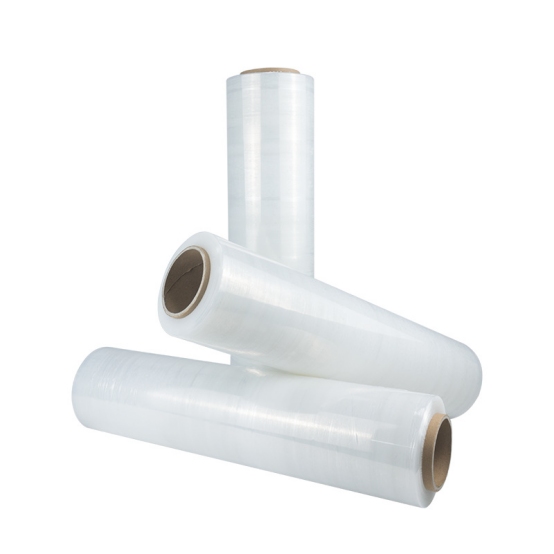
PAC·ZELON stretch film uses LLDPE and can also include metallocene polyethylene for improved puncture resistance and rebound force. These properties help the film hold pallet layers together and reduce movement during transportation.
Our industrial stretch film solution includes hand and machine grades for different warehouse operations. Hand stretch film can suit irregular loads and smaller shipping volumes. Machine stretch film is more suitable for factories and distribution centers with high daily pallet output.
Available options include:
Transparent stretch film for barcode visibility
Black stretch film for privacy and light-sensitive goods
Colored stretch film for batch or zone identification
Hand stretch film for manual application
Machine stretch film for automated wrapping
Custom widths, thicknesses, colors, and cores
Stretch film thickness may range from 6 to 30 microns. Hand film widths can range from 50 to 450 mm, while machine film widths can range from 450 to 1000 mm, with special sizes available.
Respond to Current Packaging Industry Pressures
Packaging buyers are being asked to lower damage rates without increasing storage, labor, or material costs. On-demand air filling, right-sized cushioning, and consistent machine wrapping can help, provided the chosen design is tested under real handling conditions.
Protective packaging manufacturers can respond by improving product design in several ways:
| Current pressure | Practical packaging response |
|---|---|
| Higher warehouse costs | Store air products flat and inflate them when needed |
| More e-commerce shipments | Use flexible cushioning for different parcel sizes |
| Labor shortages | Add inflation machines or machine wrapping |
| More cross-border shipping | Select stronger materials for longer routes |
| Material reduction goals | Match thickness and size to the actual product |
| Higher damage expectations | Test packaging against real handling conditions |
Using less plastic only helps when the package still does its job. If a product breaks and must be replaced, the extra goods, freight, and repacking may outweigh the saving from a thinner film. Start with the damage risk, then reduce material where testing shows it is safe to do so.
What Should Buyers Ask Protective Packaging Manufacturers?
Before requesting a price, send the supplier the product’s size and weight, whether it is fragile, the carton dimensions, the shipping route, and the way staff will pack it. A useful quotation should cover more than the film price; it should also explain how the proposed packaging will perform.
Ask about:
Recommended material for your product weight and fragility
Film or bag thickness
Air retention time
Inflation equipment
Custom size options
Sample testing
MOQ and trial orders
Quality checks during production
Packaging and export documents
Lead time and repeat-order consistency
PAC·ZELON can discuss sizes, materials, air-retention needs, and packing methods against your product dimensions and order volume. Sample trials are a sensible step before committing to a large run.
Conclusion
Better shipment protection starts by identifying how products get damaged, then choosing materials that address those risks. Air column bags cushion fragile items, air cushion film fills gaps, and Bag-in-Bag designs add support for sensitive or irregular products. Stretch film keeps cartons stable on pallets. The result should be fewer damaged deliveries, fewer claims, and a smoother packing operation—not simply thicker packaging. PAC·ZELON offers customizable protective packaging formats and can help buyers evaluate samples for their own routes and handling needs.
FAQs
Q: What do protective packaging manufacturers provide?
A: They provide cushioning, void fill, load stabilization, moisture protection, and custom packaging solutions.
Q: How long can air column bags retain air?
A: Approximately 6–12 months under suitable conditions, depending on film thickness, seal quality, storage temperature, and handling. Verify performance with the supplier for your application.
Q: What inflation level is recommended for air cushion film?
A: Around 70–80% may be a good starting point. Avoid both under-inflation and a hard, fully inflated cushion; test for a resilient feel that absorbs impact.
Table of Contents
Categories
Recent Posts
FAQ
What is your minimum order quantity (MOQ)?
Can I request samples before placing an order?
What are your typical lead times and shipping options?
Get a Free Quote