When to Switch to Machine Stretch Film Before Costs Rise
-
 author
- 4th September 2026
Hand wrapping may look inexpensive because it needs no large machine investment. The loss appears later: operators spend more time circling pallets, film use changes from shift to shift, and finished loads wait at dispatch. If you are deciding when to switch to machine stretch film, focus on the cost of wrapping one acceptable pallet, not the price of one roll. That comparison reveals whether manual wrapping is still flexible or has become a recurring production cost.
Quick Answer: When to Switch to Machine Stretch Film
Consider the switch when pallet flow is steady, loads are repeatable, wrapping delays staging, or different operators produce noticeably different results. Machine wrapping becomes more attractive when you already have a suitable wrapper and can standardize its program. Stay with hand film when volumes are sporadic, loads change shape frequently, wrapping happens in several locations, or equipment space and maintenance support are limited.
There is no universal pallet-per-day threshold. Compare the same load under both methods and use the decision signals below.
| Operational signal | Stay with hand film | Move toward machine film |
| Pallet flow | Occasional or uneven | Steady enough to form a wrapping queue |
| Load profile | Irregular sizes and frequent exceptions | Repeatable dimensions and stacking pattern |
| Labor | Wrapping fits naturally into available time | Wrapping pulls people away from picking or dispatch |
| Process control | Operator judgment is useful | Repeatable tension and wrap pattern are priorities |
| Site readiness | No fixed wrapping point or service support | Suitable wrapper, floor space, power, and trained operators |
Compare the Real Cost per Wrapped Pallet
The hand stretch film vs machine stretch film decision should use one denominator: a pallet that is wrapped, stable, and ready for its normal route. Add the material, labor, interruptions, rewraps, and equipment cost required to reach that result.
Labor and Throughput
Time several normal hand-wrapping cycles. Include collecting the roll, walking the load, securing the film tail, and moving the pallet onward. Then note whether the operator stops another task to wrap. A wrapper may reduce hands-on work, but loading, starting, inspecting, and removing the pallet still take time. Compare actual workflow time rather than an ideal machine cycle.
Film Use and Wrap Consistency
Weigh or otherwise record film used on the same pallet pattern. Manual tension and overlap can vary with technique and fatigue. A correctly set machine can repeat a program, but it can also repeat an inefficient setting. The aim is not the fewest wraps. It is the least film that still produces the required containment without crushing cartons or leaving weak zones.
Equipment, Maintenance, and Changeovers
A stretch wrapper adds capital cost, floor-space needs, setup, maintenance, and changeover time. It also requires film that matches the carriage and expected pre-stretch. Guidance from FROMM Packaging and Robopac USA reinforces a practical point: machine performance depends on the wrapper, settings, load, and film working as one system.
Signs Manual Wrapping Has Become the Bottleneck
Look for several signals occurring together rather than waiting for one arbitrary volume number:
- Completed pallets collect because wrapping cannot keep pace with staging.
- Operators add extra layers to compensate for uncertain tension.
- The same load looks or feels different across shifts.
- Rewrapping and partially used rolls are becoming normal.
- People are repeatedly pulled away from higher-value warehouse tasks.
- Your main pallet patterns are stable enough to use repeatable programs.
If these signs persist for representative weeks, measure the cost per wrapped pallet before buying more labor or accepting the delay.
When Hand Stretch Film Is Still the Better Choice
Automation is not automatically the economical choice. Hand stretch film remains practical for low-volume work, mixed cartons, temporary protection, off-line wrapping, and loads that need close operator control. It can also serve as a backup when a wrapper is unavailable.
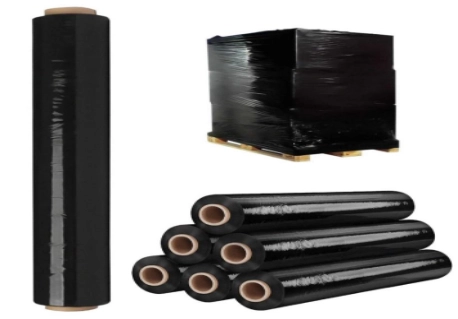
Opaque or colored hand film adds a separate function: concealing goods or identifying batches and warehouse zones. It does not, by itself, determine whether manual application is efficient. Choose the color for the load-management need and the application method for the workflow.
Hand wrapping becomes the weaker option when repeatable pallet volume, labor pressure, and process variation matter more than mobility. Conversely, machine wrapping may be a poor fit when most loads are one-off shapes or the facility cannot support a fixed wrapping process.
Run a Controlled Side-by-Side Trial
Do not compare a familiar hand process with an untested machine setup. Select representative pallets, use the same load construction, and define the acceptable result before testing. Record operator time, total elapsed time, film used, breaks or interruptions, rewraps, and the condition of the completed load.
For the machine trial, document the wrapper model, carriage type, selected program, film width and gauge or micron, core details, and storage conditions. Start within the equipment and film supplier’s guidance, then change one setting at a time.
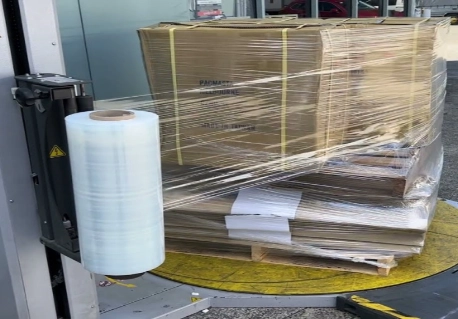
Run enough cycles to include normal variation. A single successful pallet proves compatibility only for that moment; a short production trial shows whether the process is repeatable.
How We Help Buyers Make the Switch at PAC·ZELON
At PAC·ZELON, we first ask how the load is built and wrapped. Our stretch film range includes transparent hand film, black or colored hand film, and machine stretch film. We can discuss width, thickness, color, core, load shape, transport route, and wrapping equipment before preparing a sample recommendation.
For buyers managing several load types, our industrial stretch film solutions provide a starting point for matching application method and load-containment needs. The objective is a film that runs reliably in the chosen process, not a specification selected in isolation.
A Practical Decision Rule
Use this three-way rule:
- If wrapping is low-volume, mobile, or dominated by irregular loads, choose hand film.
- If pallet flow is steady, loads repeat, and a suitable wrapper is available, trial machine film.
- If the operation mixes standard pallets with frequent exceptions, use a hybrid process: machine wrap the repeatable loads and keep hand film for exceptions and backup.
- If you can choose only one method today, keep hand film until measured labor, delay, and film costs justify a controlled machine trial. If the wrapper is already installed, stop treating film as interchangeable and match the machine film to its carriage and program.
- If you remember one thing, remember this: switch when a verified machine process lowers the cost of an acceptable wrapped pallet, not when a generic daily-volume number tells you to.
FAQs
Q: What should I measure before switching to machine stretch film?
A: Record wrapping time, film used, rewraps, delays, and load stability for a representative group of pallets. Then compare the total cost of an acceptable wrapped pallet under both methods. A switch makes sense when the machine process delivers lower cost and more dependable output.
Q: Can I use hand stretch film on a stretch wrapper?
A: Do not assume the rolls are interchangeable. Hand and machine films are supplied for different application methods, roll formats, and operating conditions. Confirm the wrapper model, carriage, core, film dimensions, and expected stretch with the equipment and film suppliers before testing.
Q: What information should I send when requesting a machine film sample?
A: Share your pallet dimensions, load weight and shape, carton or product type, wrapper model and carriage, current film width and gauge or micron, and core details. Add monthly usage, storage conditions, route, and the problem you want to solve. Photos of the unwrapped and wrapped load also make sample selection more useful.
Ready to Compare Your Current Wrapping Cost?
Choose one representative load, record your current hand-wrapping baseline, and let us help you plan a comparable machine-film trial. Review our hand and machine film options, then contact PAC·ZELON with your load and wrapper details for a tailored recommendation.
Table of Contents
Categories
Recent Posts
Why Should You Trust Stretch Film Manufacturers for Your Packaging Needs
FAQ
What is your minimum order quantity (MOQ)?
Can I request samples before placing an order?
What are your typical lead times and shipping options?
Get a Free Quote