Stretch Film Keeps Breaking: How to Reduce Rework and Production Line Downtime Costs
-
 author
- 28th August 2026
Every break stops the wrap cycle and sends an operator back to the pallet. When stretch film keeps breaking, the visible tear is only the symptom. The larger cost comes from lost throughput, repeated wrapping, and inconsistent load containment.
Buying thicker film may feel safe, but it can hide the real issue. Breaks often come from the interaction between film, load, wrapping method, and roll handling. A controlled diagnosis prevents costly trial and error.
Read the Break Pattern Before Changing the Film
Start with where and when the break occurs. A tear at the same pallet corner points to a different cause than a clean break inside a machine carriage. Recording the break location, wrapper setting, load type, and roll batch gives a supplier useful evidence instead of a vague complaint.
| What you see | Likely area to check | First action |
| Tears at the same corner | Sharp edge or high local tension | Add corner protection or adjust the wrap path |
| Breaks during acceleration | Tension, pre-stretch, or film-to-machine mismatch | Reduce one setting at a time and retest |
| Damage begins at the roll edge | Roll handling or storage damage | Inspect the edge before loading the roll |
| Random holes grow into tears | Puncture resistance or load protrusions | Check the load surface and compare a better-matched sample |
| Film tracks poorly through the carriage | Roller condition or film path | Clean, inspect, and reload the film correctly |
This pattern check keeps the investigation focused.
Why Stretch Film Keeps Breaking
Most recurring failures fall into five groups: film selection, wrapper settings, load shape, roll damage, and equipment condition. Test them in a fixed order. If several variables change at once, a successful trial will not tell you which change solved the problem.
The Film Does Not Match the Load
A stable carton pallet and an irregular metal-parts pallet do not place the same demands on film. Uneven faces, projections, or sharp edges need greater puncture tolerance and enough rebound force to stay tight. LLDPE is the common base material, while metallocene polyethylene options can suit applications that need stronger puncture performance.
Do not compare film by thickness alone. Check whether lower layers stay anchored, corners remain protected, and the film recovers after an irregular surface. The real pallet matters more than one number on a specification sheet.
Tension or Pre-Stretch Is Too Aggressive
More tension does not always create a safer pallet. Excessive pull can turn a small defect into a full break. If machine stretch film breaking begins after a roll change, compare current settings with the previous stable run.
Reduce only one variable per test. Record pre-stretch, carriage speed, wrapper speed, and the break position. A film that runs well on one configuration may fail on another.
Sharp Corners Concentrate Stress
Corner pressure can turn a small nick into a long tear. Carton overhang, protruding parts, and exposed edges are common triggers. Changing the wrap path, adding corner protection, or correcting pallet alignment may solve the issue without thicker film.
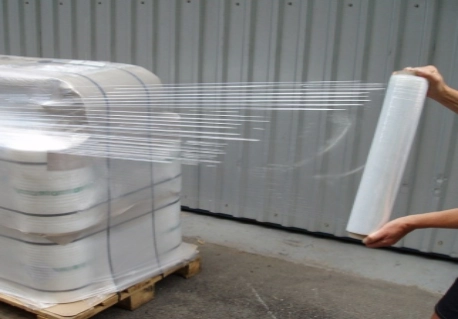
For manual applications, hand stretch film gives the operator control over wrap angle and overlap. A repeatable walking speed and pull force are still essential.
Roll Edges Were Damaged Before Use
A dropped roll may look acceptable until it unwinds. A crushed core or nicked edge creates a repeating weak point. Check the carton, core, and roll edges before blaming the formulation.
Follow the supplier’s storage method and keep roll edges away from cutting surfaces. Careful internal handling also makes troubleshooting more reliable.
The Wrapper Path or Rollers Need Attention
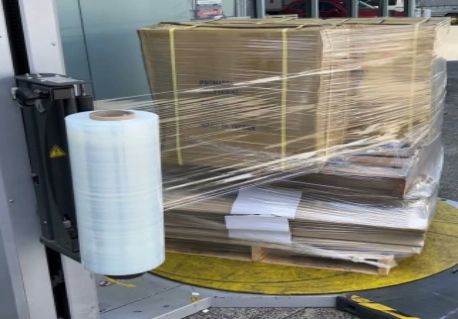
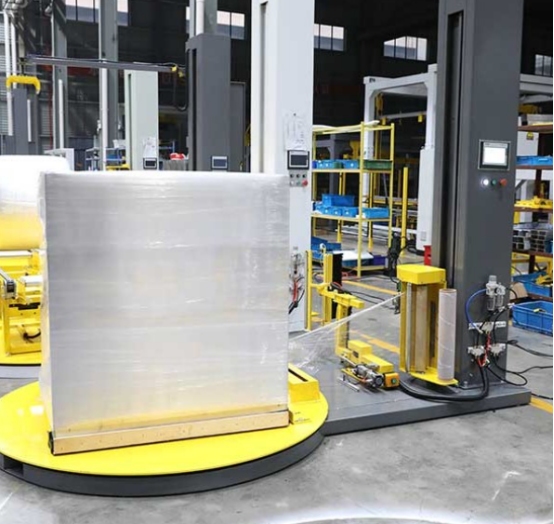
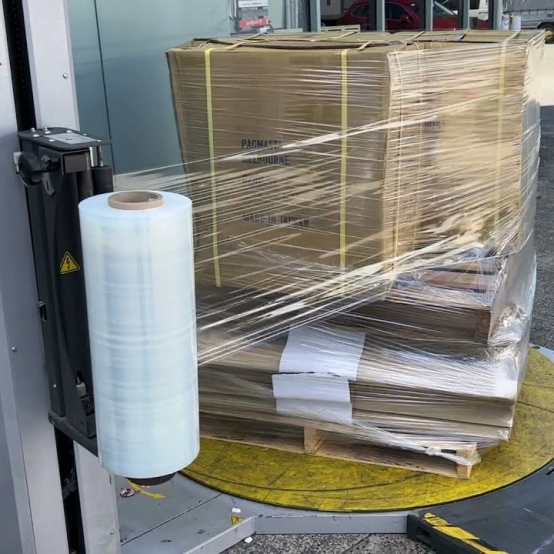
When film breaks inside the carriage, inspect the full path. Residue, rough rollers, misalignment, or incorrect threading can add stress. Follow the machine’s maintenance procedure. Test machine stretch film under normal production settings, not only during a short low-speed run.
Run a Controlled Test Instead of Guessing
A useful sample test changes one factor at a time. Use the same pallet, wrapper, operator method, overlap, and revolutions for the current and candidate films.
Check stability, corner condition, film recovery, barcode visibility, and film used per pallet. A cheaper roll can cost more if it needs extra wraps or creates rework.
Test manual and automated applications separately. Give the supplier your width, gauge or micron thickness, core requirement, and wrapper model. Match the sample to the process, not a generic specification.
What B2B Buyers Should Send With a Sample Request
A useful RFQ describes the application, not only price and thickness. Include:
- Pallet dimensions, approximate load weight, and load shape
- Product surfaces, sharp corners, overhang, or irregular projections
- Hand wrapping or machine model and current settings
- Current film width, thickness, color, and recurring failure point
- Photos or a short video showing the pallet and break pattern
- Monthly volume, delivery market, and any privacy or classification need
The more complete the application details, the easier it is to identify the root cause of film breaks and recommend the right stretch film solution. A well-prepared RFQ helps suppliers match film specifications to your actual operating conditions, reducing trial-and-error, downtime, and unnecessary material costs.
How We Match Stretch Film at PAC·ZELON
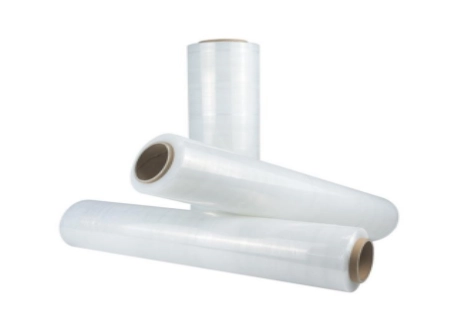
At PAC·ZELON, we begin with the load, wrapping method, and failure pattern. We then match the material option, width, thickness, color, and core requirement to that application. Our range covers transparent hand film, black or colored hand film, and transparent machine film for different operating conditions.
For buyers evaluating a new application, our industrial stretch film solutions page provides a practical starting point. A production-representative sample test remains the best way to confirm fit before a larger order.
Fix the Wrapping System, Not Just the Tear
If stretch film keeps breaking, treat it as a system problem. Read the pattern, inspect the load and roll, verify the film path, and test one setting at a time.
FAQs
Q: Why Does Stretch Film Keep Breaking During Pallet Wrapping?
A: Frequent breaks can result from excessive tension, sharp pallet corners, damaged roll edges, incorrect film threading, or a mismatch between the film and the load. Check where the tear begins and change one variable at a time to identify the root cause.
Q: How Can I Tell Whether the Film or the Wrapper Is Causing the Break?
A: Track the location and retest with a known stable roll. If films break at the same carriage point, inspect the wrapper. If the problem follows one roll or batch, inspect it with the supplier.
Q: What Should I Include When Requesting a Stretch Film Sample?
A: Send pallet dimensions, load weight, surface condition, wrapping method, current specification, equipment settings, and failure photos.
Ready to Reduce Repeat Film Breaks?
Stop treating every tear as a reason to buy a heavier roll. Request a matched sample from PAC·ZELON with your load details, wrapper method, and break pattern. We will help you test a better-matched option.
Table of Contents
Categories
Recent Posts
Why Should You Trust Stretch Film Manufacturers for Your Packaging Needs
FAQ
What is your minimum order quantity (MOQ)?
Can I request samples before placing an order?
What are your typical lead times and shipping options?
Get a Free Quote