How Can Inflatable Air Cushion Packaging Reduce Shipping Costs?
-
 author
- 31st July 2026

Shipping costs now depend on more than distance and parcel weight. Carton size, warehouse space, packing speed, damage claims, and material waste all influence the final cost of each order. For e-commerce sellers, logistics providers, exporters, and manufacturers, bulky protective materials can quietly increase expenses throughout the fulfillment process.
Inflatable air cushion packaging addresses this issue. It stores protective material as compact, uninflated film. Cushions are produced only when needed. This approach can lower freight weight, cut storage demand, speed up packing, and prevent movement inside the carton.
The main point is not simply adding more air pillows. Real savings come from matching the cushion type, carton size, product weight, and transport risk.
Why Shipping Costs Rise Before a Parcel Leaves the Warehouse?
Many packaging costs appear before a carrier scans the parcel. Oversized cartons use more corrugated material. Pre-inflated fillers take up rack space. Heavy cushioning adds weight. Poorly secured products lead to returns, replacement shipments, and extra customer service work.
A useful cost review should include:
- Packaging material cost per order
- Carton dimensions and dimensional weight
- Storage space used by protective materials
- Labor time at the packing station
- Product damage and return rates
- Waste collection and disposal costs
This broader view shows why the cheapest filler is not always the lowest-cost choice. A low-priced material may need a larger box, more storage, and extra packing time. Inflatable packaging solutions can reduce several of these costs at the same time.
How Inflatable Air Cushion Packaging Lowers Freight Charges?
Freight charges often increase when a parcel is large compared with its actual weight. Carriers may calculate dimensional weight from package length, width, and height. A large carton filled with bulky padding can therefore cost more even when the product is light.
Inflatable air cushion packaging adds little physical weight. It fits narrow gaps. It also supports smaller cartons. However, it should be part of a right-sizing plan. It should not be used as a reason to keep oversized boxes.
Reducing Physical Package Weight
Air creates most of the cushioning volume. The film adds only limited weight. Compared with dense padding, this can reduce final parcel weight across large numbers of small and medium shipments.
This is valuable for:
- Cross-border air shipments
- Subscription boxes
- Cosmetics and personal care products
- Consumer electronics
- Shoes, bags, and accessories
- Small industrial parts
The saving on one parcel may seem modest. Across 10,000 or 100,000 monthly orders, small weight reductions can become significant.
Supporting Smaller Cartons
Air pillows and inflatable bubble structures fill controlled gaps. They do so without thick layers of material. Packers can choose cartons closer to the product size.
Current regulation also favors right-sized packaging. The PPWR generally applies from August 12, 2026. Its 50% maximum empty-space requirement for grouped, transport, and e-commerce packaging is scheduled for 2030 or three years after the relevant implementing rules enter into force, whichever is later. Air pillows and other fillers count as empty space under Article 24.Companies should therefore reduce unused carton volume first. Then they should add only the cushioning needed for protection.
Protective packaging is also inventory. Bulky fillers may require large storage areas, frequent replenishment, and more inbound truck capacity. Uninflated film rolls are compact. As a result, businesses can store more usable packaging in less space.
This matters in urban fulfillment centers, seasonal warehouses, and factories where floor space is expensive. On-demand inflation also reduces internal material movement between storage and packing areas.
Storing Film Instead of Air
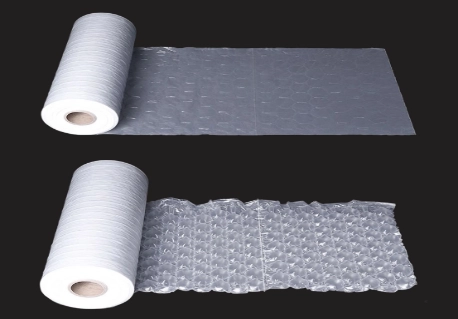
A roll of uninflated material occupies far less room than the same protective volume after inflation. PAC·ZELON air column products use PE and PA multi-layer film. These products offer strong air retention and independently separated columns. What’s more, these products save transport and warehouse space before inflation.
At PAC·ZELON, we offer a broad protective packaging product range for e-commerce, logistics, and industrial shipping. Our air cushion film comes in compact rolls and is inflated at the packing station. We also provide air column rolls when products need stronger wrapping, puncture resistance, and longer air retention. For unusual or fragile products, our team can recommend a suitable option through our protective packaging solutions.
Reducing Product Damage and Hidden Return Costs
The outbound freight bill is only one shipping cost. A damaged order may lead to a replacement shipment, refund, repacking work, customer complaints, and lost future sales. For high-value or fragile goods, damage prevention may produce a larger saving than a small reduction in material price.
Inflatable packaging limits product movement. It spreads impact across air chambers. Different formats serve different tasks. Therefore, product testing remains essential.
Matching the Cushion Format to the Risk
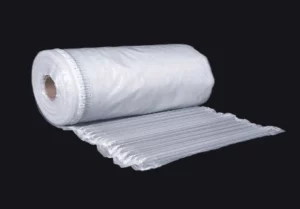
Standard air pillows suit void fill and light blocking. Inflatable bubble film can wrap products and absorb vibration. Air column bags provide 360-degree protection for bottles, electronics, glassware, ceramics, and precision components. A bag-in-bag air column system can suspend highly fragile items inside an outer protective chamber.
Choose the format according to:
- Product weight and shape
- Sharp edges or puncture risk
- Drop height and handling frequency
- Transport duration
- Temperature and humidity
- Required air-retention period
- Acceptable damage rate
A packaging trial should compare more than appearance. Run drop tests, vibration tests, and real shipping trials. Measure damage rate, packing time, material use, and total shipment cost.
Improving Packing Speed and Labor Efficiency
Fast packing matters during sales peaks, launches, and holiday seasons. Loose paper, foam pieces, and manual wrapping can slow operators. They can also create inconsistent results. An inflation machine produces cushions beside the workbench. This reduces walking, cutting, and handling.
A simple packing standard can improve consistency:
- Select the smallest suitable carton.
- Place the product away from carton walls.
- Use enough cushioning to stop movement.
- Avoid overfilling or excessive air pressure.
- Seal and test the finished parcel.
A recommended inflation level for air cushion film is about 70–80% capacity. Over-inflation can make the cushion harder. It may also reduce its ability to absorb impact. And the PE and PE+PA choices are designed for different protection levels and transport periods.
Using Less Material Without Weakening Protection
Sustainability and cost control increasingly point in the same direction. Lightweight, efficient packaging can reduce material purchases and waste volume. The U.S. Environmental Protection Agency notes that lighter and more efficient packaging can save companies money. It can also reduce discarded material. The goal is not to replace every material with air. It is to remove unnecessary packaging while keeping the protection required for the product.
- Use smaller cartons.
- Select the correct film thickness.
- Reduce excessive wrapping layers.
- Inflate only the amount required.
- Standardize packaging by product group.
- Test recyclable film options where local collection exists.
Custom sizing can further reduce waste. A cushion designed around the product uses less film. It also leaves less uncontrolled space than a one-size-fits-all method.
How to Calculate the Real Cost Saving?
Before changing packaging, record a baseline for at least four weeks. Then test inflatable air cushion packaging on a defined product group.
Measure average parcel weight, carton volume, packaging cost, packing time, storage space, damage rate, replacement freight, and disposal volume.
Use this practical formula:
Net saving = freight saving + storage saving + labor saving + avoided damage cost + avoided disposal cost − film cost − equipment depreciation − maintenance − energy − downtime and training cost
Do not judge the result by film price alone. A slightly higher film cost may still create a lower total cost. This happens when the parcel is smaller, lighter, faster to pack, and less likely to arrive damaged.
Conclusion
Inflatable air cushion packaging can reduce shipping costs. It affects several cost centers at once. Its low material weight can lower physical freight charges. Compact rolls reduce warehouse demand and inbound transport volume. On-demand inflation supports faster packing. Suitable air pillows, bubble cushions, and air columns can reduce damage-related expenses.
The strongest savings come from right-sized cartons and product-specific testing. Air cushions should fill only the space required for protection. They should not hide an oversized box. For businesses facing dimensional weight charges, stricter packaging rules, and rising fulfillment costs, a measured switch to inflatable packaging can improve cost control and shipping performance. It also supports a cleaner packing area and more predictable material planning during busy seasons.
FAQs
Q: How much inflatable air cushion packaging is needed for a 20 L carton?
A: Fill only the remaining protective gap after choosing the smallest suitable carton.
Q: Can air cushions protect a 20 kg product?
A: Use heavy-duty air columns and confirm performance with drop tests.
Q: What inflation level helps control shipping costs?
A: Inflate film to 70–80%; excessive pressure may weaken cushioning.
Table of Contents
Categories
Recent Posts
Why Should You Trust Stretch Film Manufacturers for Your Packaging Needs
FAQ
What is your minimum order quantity (MOQ)?
Can I request samples before placing an order?
What are your typical lead times and shipping options?
Get a Free Quote