How to Choose a Reliable Stretch Film Factory to Reduce Packaging Waste
-
 author
- 20th August 2026

Every torn roll, loose pallet, and rewrapped shipment costs more than the film itself. If your stretch film factory cannot keep thickness, stretch, and puncture resistance consistent, you may lose money through wasted packaging material, slowed wrapping work, and transport damage. Choosing the right supplier is therefore not a simple price check. It is a way to protect cargo, control film use per pallet, and keep warehouse operations steady. The practical checks below show how buyers can evaluate material, performance, specifications, production control, and service before placing a bulk order.
Start With the Load, Not the Price List
Before comparing quotations, define what the film must do. Note the pallet dimensions, load weight, sharp corners, storage conditions, transport distance, and whether wrapping is manual or automatic. A light, uniform carton load does not place the same demands on film as metal parts, irregular boxes, or a tall export pallet. This information lets a stretch film factory recommend a useful specification instead of offering a generic roll that merely looks economical.
Cost should be judged per secured pallet, not only per kilogram or roll. A film with dependable stretch and rebound may use less material for each load. A cheap film that tears or loses tension can require extra layers, more labor, and rewrapping. Ask for samples and test them on your actual pallets. The result will tell you more than a polished quotation.
Check the Raw Material and Film Performance
A useful supplier review should separate what the film is made from from how it performs on a real pallet. Both questions matter, and they should be tested independently.
Material formulation matters
Stretch film is commonly based on linear low-density polyethylene, or LLDPE. At PAC·ZELON, we also use metallocene polyethylene in suitable formulations to support puncture resistance and rebound force. Those properties matter when cartons have hard edges or when a wrapped pallet will experience vibration during transport. Ask the factory to explain the material structure and to provide a specification sheet rather than relying on broad claims such as premium quality.
Look beyond nominal thickness
Thickness is only one part of performance. Buyers should also evaluate elongation, cling, tear behavior, puncture resistance, and the film’s ability to retain load tension after wrapping. Two films marked with the same micron value can behave differently on the same pallet. A useful sample trial should record how many wraps were needed, whether the film necked down evenly, and whether the load remained stable after handling.
Match the Product Range to Your Wrapping Method
| Film format | Best suited to | Practical selection value |
|---|---|---|
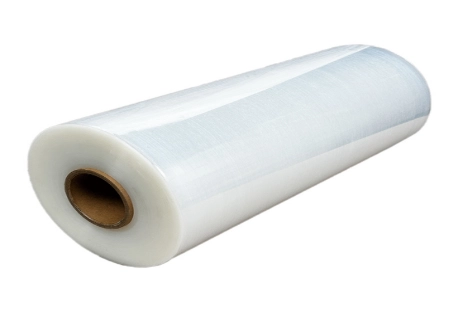
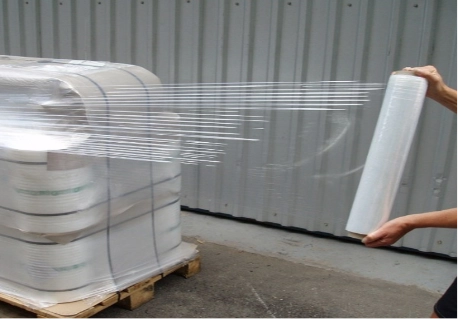
| Hand stretch film | Low-volume work, manual wrapping, and mixed pallets | Gives operators direct control; secures cartons, adds temporary dust and moisture protection, and keeps barcodes visible when clear film is used. |
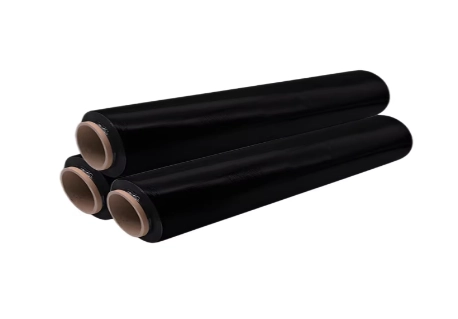
| Opaque black stretch film | Privacy, concealment, and reduced light exposure | Hides goods and helps classify loads; colored variants can separate customer orders, batches, or warehouse zones. |
| Machine stretch film | High-volume, automated pallet wrapping | Supports efficient throughput when the film matches the wrapper settings and expected pre-stretch level. |
Confirm Specification Control and Batch Consistency
Reliable film must arrive with predictable dimensions and behavior. PAC·ZELON’s product knowledge range covers hand-film widths from 50 to 450 mm, machine-film widths from 450 to 1,000 mm, and thickness options from 6 to 30 microns, with special widths available by request. Paper and plastic cores are both possible. These ranges give buyers flexibility, but the purchase order should still state the exact width, thickness, color, core type, roll length or net film weight, and packing method.
Ask how the factory checks those values during production and what tolerance it commits to. Also clarify whether quoted roll weight includes the core. Small differences can become expensive across thousands of rolls. For repeat orders, request the same approved sample or written specification as the reference standard. That makes discussions about a future batch more objective and much easier to resolve.
Evaluate Customization Without Losing Control
Customization is valuable when standard rolls create waste or do not fit existing equipment. Width, thickness, color, and other requirements can be adjusted, but every change affects minimum order quantity, lead time, cost, and trial requirements. Ask the stretch film factory which specifications are standard, which require a production run, and whether it can provide a pre-production sample. For machine use, share the wrapper model and operating conditions before approving the final film.
Be cautious when a supplier agrees to every request without asking about the load or application. Good technical questions are a positive sign. They show that the supplier is trying to prevent a mismatch rather than simply close the order.
Review Capacity, Lead Time, and Communication
A strong sample is not enough if bulk delivery is unpredictable. Confirm normal production lead time, peak-season capacity, packaging for export, and how the supplier handles urgent replenishment. Ask whether production is completed in-house or subcontracted, and request evidence that matches the scale of your order. If certifications or regulatory documents matter in your market, verify their scope, issuer, and validity instead of accepting a logo on a sales sheet.
Communication also affects supply risk. The factory should answer specification questions clearly, identify what is still unknown, and document agreed changes. Fast replies are useful, but precise replies are better. One named contact, a signed specification, and a clear sample-approval process can prevent confusion when purchasing, production, and quality teams are in different countries.
How We Approach Stretch Film Selection at PAC·ZELON
At PAC·ZELON, we offer transparent hand film, black and colored hand film, and transparent machine-grade film. We can customize width, thickness, color, and other practical requirements. Our starting point is the application: how the load is built, how it is wrapped, and what it will face in storage and transit. From there, buyers can compare samples under realistic conditions and choose a film that balances protection, material use, and operating efficiency.
The right factory should make the buying decision easier to verify. Define the load, test the sample, lock the specification, and confirm how repeat batches will be controlled. That process is far more dependable than choosing on price or brochure language alone.
FAQs
Q: What information should I send to a stretch film factory for a quotation?
A: Send the pallet size, load weight, product type, sharp-edge risk, wrapping method, desired width and thickness, color, core preference, monthly volume, and destination. Photos or a short wrapping video can make the recommendation more accurate.
Q: How can I compare stretch film samples fairly?
A: Wrap the same pallet under the same conditions. Record film consumption, number of wraps, breaks, ease of application, and load stability after movement. For machine film, keep the wrapper settings consistent during the comparison.
Q: Is thicker stretch film always better?
A: No. The correct film depends on load shape, weight, equipment, and transport risk. A well-formulated thinner film may perform efficiently, while an unnecessarily thick film can increase material cost without improving containment.
Ready to Test the Right Stretch Film?
Looking for a film that fits your load and wrapping process? Explore PAC·ZELON‘s hand stretch film, opaque black stretch film, or machine stretch film, then contact us for a customized recommendation.
Table of Contents
Categories
Recent Posts
Why Should You Trust Stretch Film Manufacturers for Your Packaging Needs
FAQ
What is your minimum order quantity (MOQ)?
Can I request samples before placing an order?
What are your typical lead times and shipping options?
Get a Free Quote